Quick Answer: Rainwater harvesting is legal in all 50 US states as of 2026, but regulations vary. Most states have no restrictions at all. A handful of states (Colorado, Utah, and a few others) impose limits on collection volume or require permits. In Colorado, residential properties may collect up to 110 gallons in two rain barrels (CRS 37-96.5-103). Understanding your state's rules is essential for off-grid and rural land buyers planning water self-sufficiency.
Rainwater harvesting — collecting precipitation from rooftops or other surfaces for later use — is legal in most of the US. But regulations range from unrestricted to tightly controlled depending on your state, and in a few cases, your county. Knowing the rules before you buy off-grid land prevents compliance headaches later.
Why Rainwater Laws Matter for Land Buyers
For off-grid land buyers and homesteaders, rainwater collection can supplement or replace well water — reducing infrastructure costs by $5,000-$15,000 (the typical well drilling expense). A modest 1,500 sq ft roof in an area receiving 30 inches of annual rainfall can capture approximately 28,000 gallons per year.
However, water rights in the United States are complex. In Western states, the Prior Appropriation doctrine treats water (including precipitation) as a public resource — which is why some states historically restricted private rainwater collection.
States With No Restrictions
The majority of US states place no limits whatsoever on residential rainwater harvesting. These include most Eastern states, Southern states, and several Western states that have explicitly legalized collection:
- Texas — actively encourages collection; offers property tax exemptions for rainwater systems (Texas Tax Code 11.32)
- Arizona — offers a 25% income tax credit (up to $1,000) for rainwater harvesting systems
- Oregon — fully legal for rooftop collection; no permit required for residential use
- Missouri, Arkansas, Tennessee — no restrictions, no permits, strong off-grid tradition
- All Southeastern states — generally unrestricted
States With Specific Regulations
| State | Restriction | Source |
|---|---|---|
| Colorado | Max 110 gallons in 2 rain barrels for residential properties | CRS 37-96.5-103 (2016 amendment) |
| Utah | Up to 2,500 gallons without registration; larger systems require state registration | Utah Code 73-3-1.5 |
| Nevada | Legal but cannot interfere with existing water rights | NRS 533.010 |
| Oklahoma | Legal; systems over 50,000 gallons may need Water Resources Board registration | Title 82 OS 105.12 |
How Much Water Can You Actually Collect?
Use this formula: Roof area (sq ft) × rainfall (inches/year) × 0.623 = gallons per year
| Roof Size | 20"/yr Rain (Southwest) | 40"/yr Rain (Southeast) | 60"/yr Rain (Pacific NW) |
|---|---|---|---|
| 500 sq ft | 6,230 gal | 12,460 gal | 18,690 gal |
| 1,000 sq ft | 12,460 gal | 24,920 gal | 37,380 gal |
| 2,000 sq ft | 24,920 gal | 49,840 gal | 74,760 gal |
The average American household uses approximately 82 gallons per day (USGS 2020 Water Use data), or about 30,000 gallons/year. A 2,000 sq ft roof in a moderate rainfall area can potentially provide most of a household's water needs.
Rainwater Collection System Costs
- Basic rain barrel setup (55-110 gal): $50-$300
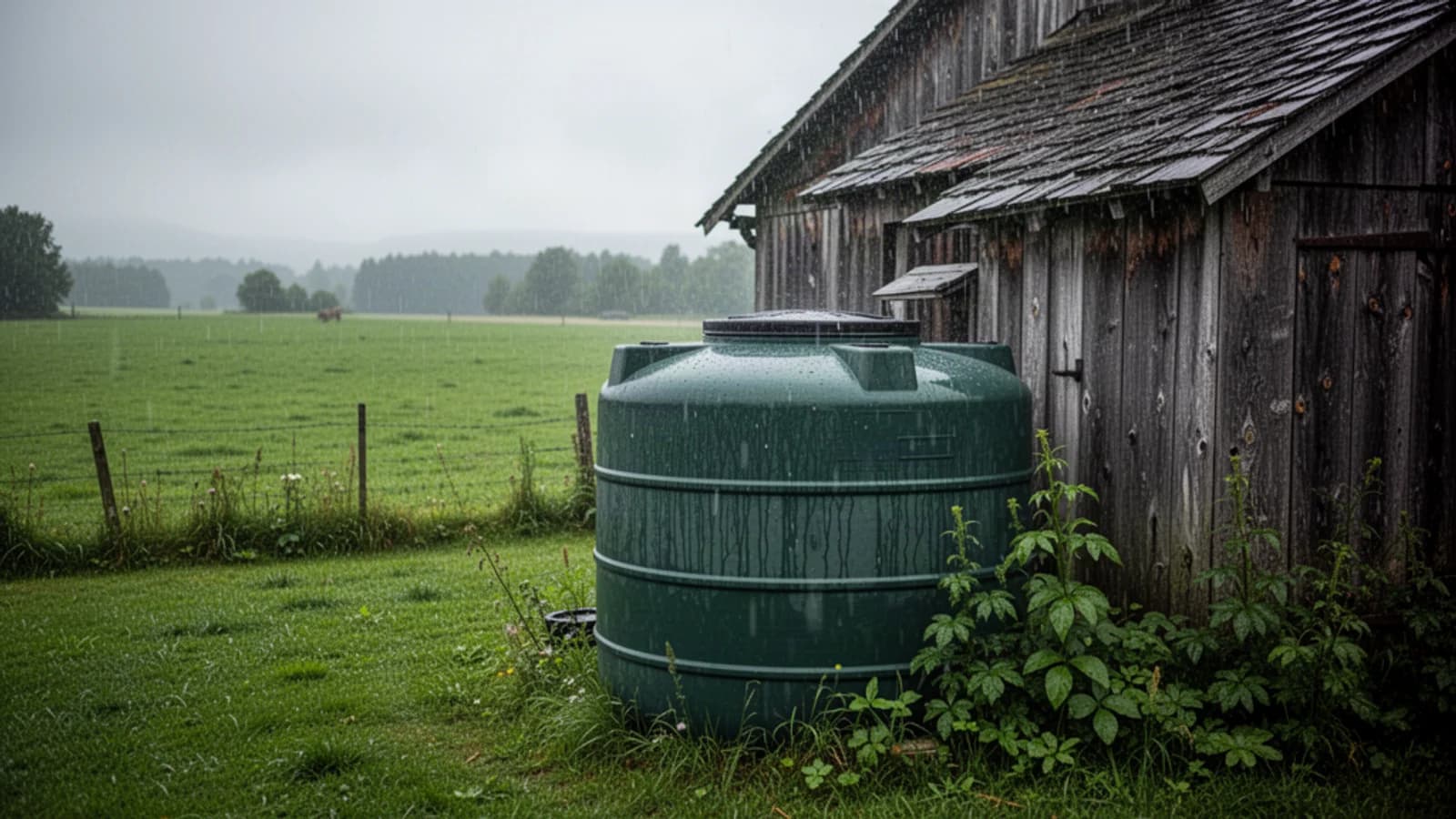
- Above-ground poly tank (500-2,500 gal): $500-$3,000
- Full residential system (2,500-10,000 gal + filtration + pump): $3,000-$15,000
- Large cistern system (10,000+ gal): $8,000-$25,000 installed
For potable (drinking) use, add UV filtration ($300-$1,000) and sediment filtration ($200-$500). The CDC recommends treating all rainwater before drinking, even in clean air areas.
Key Takeaways for Land Buyers
- Check your specific state and county laws before relying on rainwater as a primary water source
- Western states with prior appropriation water rights are most likely to have restrictions
- Rainwater is an excellent supplement to well water, reducing pump wear and providing backup
- Tax incentives exist in several states — Texas and Arizona offer direct financial benefits for rainwater systems
- Always treat rainwater before drinking — rooftop contaminants, bird droppings, and atmospheric particles require filtration
Bottom Line
Rainwater collection is legal everywhere in the US, with meaningful restrictions only in Colorado and Utah. For off-grid land buyers, a properly designed rainwater system can dramatically reduce or eliminate dependence on well water, saving thousands in drilling costs. Check your state's specific regulations and calculate your potential collection using the roof area formula above.
Sources: Colorado Revised Statutes 37-96.5-103, Utah Code 73-3-1.5, Texas Tax Code 11.32, USGS Water Use Estimates, CDC Rainwater Collection Guidelines, Acre Dreams listing data August 2026.