Quick Answer: As of 2026, 18 states have passed statewide legislation requiring local jurisdictions to allow Accessory Dwelling Units (ADUs) on residential land, up from just 3 states in 2019. California, Washington, Oregon, Colorado, Montana, Arkansas, and Iowa lead with the strongest mandates. ADUs typically range from 200–1,200 sq ft and can be used as rental units, family housing, or home offices. In states without statewide laws, ADU legality is determined entirely by local zoning.
What Is an ADU?
An Accessory Dwelling Unit is a secondary housing unit on a single-family residential lot. Types include:
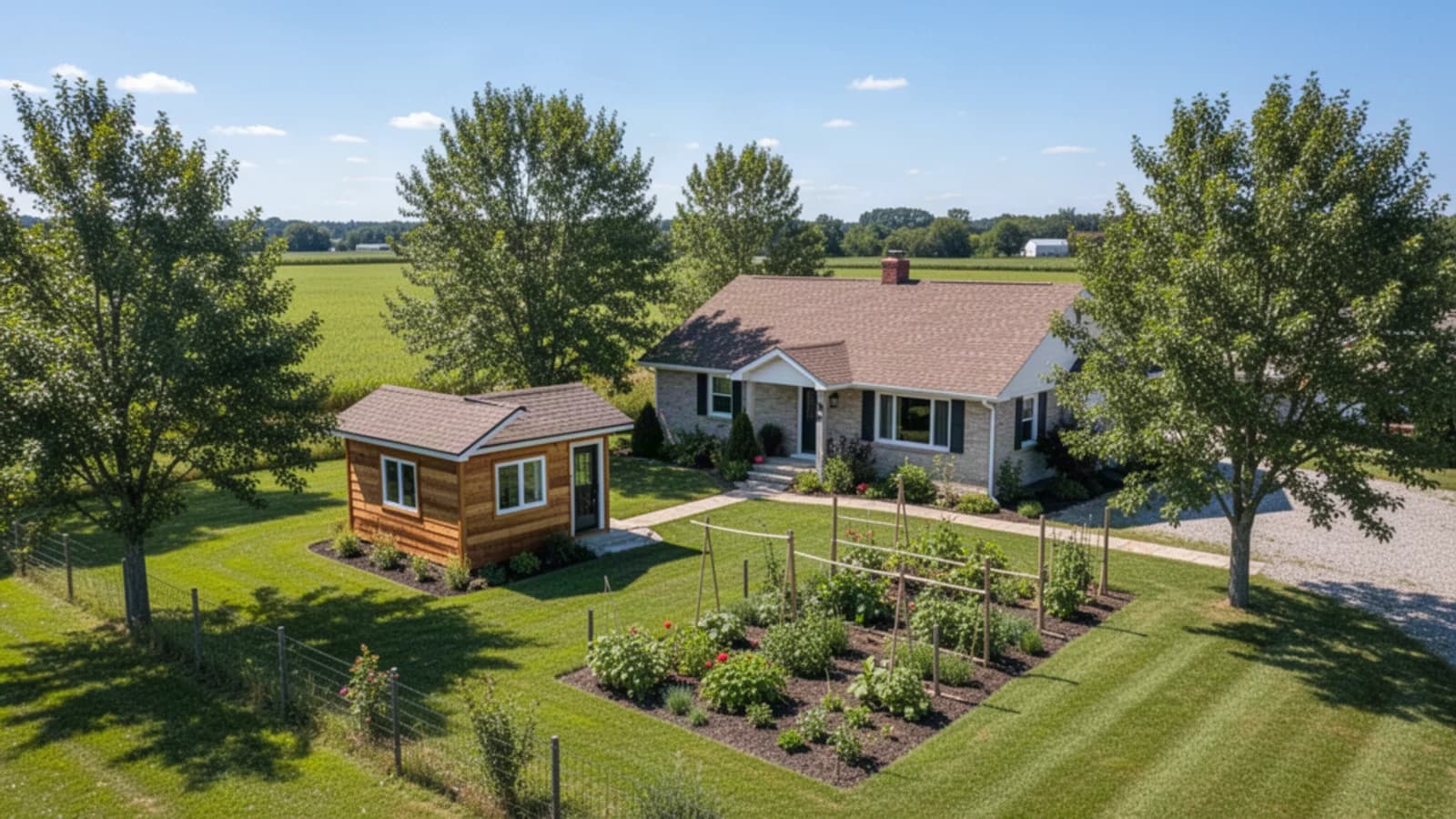
- Detached ADU: Separate structure in the yard (backyard cottage, guest house)
- Attached ADU: Addition to the main house with separate entrance
- Conversion ADU: Converted garage, basement, or attic
- Junior ADU (JADU): Very small unit (under 500 sq ft) created within an existing home
All 18 States With Statewide ADU Laws
According to the Mercatus Center's 2025 taxonomy, 18 states have broadly legalized ADU construction. States with strong mandates eliminate owner-occupancy requirements, cap fees, and require by-right approval:
| State | Key Legislation | Max Size | Strength |
|---|---|---|---|
| Arizona | HB 2720 (2024) | Varies | Strong — cities over 75K must allow ADUs |
| Arkansas | Act 313 / HB 1503 (2025) | 1,000 sq ft or 75% of primary | Strong — by right, $250 fee cap, no owner-occupancy |
| California | AB 68, SB 9, AB 2221, AB 1033 | 1,200 sq ft | Strong — state overrides local bans, 60-day permits |
| Colorado | HB 24-1152 (2024) | 500–750 sq ft | Strong — by right in metro jurisdictions, HOA bans prohibited |
| Connecticut | PA 21-29 (2021) | Varies | Moderate — by right, but towns can opt out |
| Hawaii | SB 3202 (2024) | Varies | Moderate — counties must allow 2 ADUs by end of 2026 |
| Iowa | SF 592 (2025) | 1,000 sq ft or 50% of primary | Strong — by right, no owner-occupancy, no extra parking |
| Maine | LD 2003 (2022) | 800–1,000 sq ft | Strong — up to 2 units per lot, no extra parking |
| Maryland | HB 1466 (2025) | Varies | Moderate — local ADU laws required by Oct 2026 |
| Massachusetts | Affordable Homes Act (2024) | 900 sq ft | Strong — 1 ADU by right statewide |
| Montana | SB 528 (2023) | 1,000 sq ft | Strong — by right, $250 fee cap |
| Nevada | AB 396 (2025) | Varies | Moderate — large cities must adopt rules by July 2026 |
| New Hampshire | RSA 674:71-73 (2017) | 750 sq ft | Moderate — 1 ADU per lot, up to 2 bedrooms |
| Oregon | HB 2001 / SB 1051 | 900 sq ft | Strong — ADUs in all residential zones, no parking requirement |
| Rhode Island | RIGL §45-24-73 (2024) | Varies | Moderate — by right on lots 20,000+ sq ft |
| Utah | HB 82 (2021) | Varies | Moderate — internal ADUs by right in most zones |
| Vermont | HOME Act / Act 47 (2023) | 900 sq ft | Moderate — 1 attached/internal ADU by right |
| Washington | HB 1337 (2023) | 1,000 sq ft | Strong — 2 ADUs per lot, no owner-occupancy |
What Changed in 2025–2026
- Arkansas (Act 313, effective Jan 2026) joined as one of the strongest ADU states — by-right approval, $250 fee cap, no owner-occupancy, and local bans automatically invalidated
- Iowa (SF 592, 2025) passed a strong mandate with no discretionary review, no owner-occupancy, and no extra parking requirements
- Maryland (HB 1466, 2025) requires localities to adopt ADU-permitting ordinances by October 2026
- Nevada (AB 396, 2025) requires large cities to adopt ADU rules by July 2026
- California added AB 1033, AB 1332, AB 434, and AB 462 (effective January 2026) refining condo conversion, permitting timelines, and coastal/disaster area rules
- Parking requirements and owner-occupancy mandates continued to be eliminated or reduced across multiple states
States Without Statewide Laws
In the remaining 32 states — including Texas, Florida, Georgia, and North Carolina — ADU legality is determined entirely by local municipal or county zoning codes. Some cities in these states are highly permissive (Austin, TX and Miami, FL allow ADUs), while others maintain restrictive requirements or outright bans. Always verify parcel-level zoning with your local planning department.
ADU Cost Ranges
- Detached new construction: $100,000–$300,000+ depending on size, finishes, and local construction costs
- Garage conversion: $20,000–$80,000
- Prefabricated/modular ADU: $50,000–$150,000 delivered and installed
- Tiny home as ADU: $30,000–$80,000 (if the jurisdiction classifies it as a permanent ADU)
ADUs on Vacant Land
Traditionally, ADUs were only permitted on lots with an existing primary dwelling. Some states and jurisdictions are now allowing ADUs or small primary dwellings on vacant residential lots:
- California allows small homes without a separate primary dwelling under certain SB 9 provisions
- Some Oregon jurisdictions allow "cottage cluster" developments on vacant lots
- Several states allow tiny homes as primary dwellings on residential lots, functioning similarly to ADUs
For land buyers, this means vacant residential lots in ADU-friendly states may have more development potential than previously assumed.
Bottom Line
ADU laws are expanding rapidly across the US, with 18 states now mandating that local jurisdictions allow them. For land owners and buyers, this creates new opportunities for rental income, family housing, or personal use. If you're buying residential-zoned land, check your state's current ADU legislation — regulations that were restrictive even 2 years ago may have changed significantly.
Sources: Mercatus Center ADU Taxonomy 2025, Maxable State ADU Laws, National Conference of State Legislatures, AARP ADU Model State Act, Acre Dreams listing data August 2026.