Quick Answer: Buying off-grid land requires evaluating five critical factors: water access (well feasibility or surface water rights), solar/wind potential, septic-suitable soil, road access, and county zoning that permits off-grid structures. Budget $20,000-$50,000 beyond the land purchase for basic off-grid infrastructure (solar, well, septic). Not all vacant land is suitable — proper due diligence before purchase prevents costly mistakes.
What Makes Land "Off-Grid Ready"?
Off-grid means the property operates independently from public utility infrastructure — no municipal water, sewer, or electric grid connection. According to the US Census Bureau, an estimated 250,000+ Americans live off-grid full-time, with the number growing 10-15% annually since 2020.
Not all vacant land works for off-grid living. The ideal off-grid parcel has:
- Water source — well-drilling feasibility (check USGS groundwater maps), spring, or creek with water rights
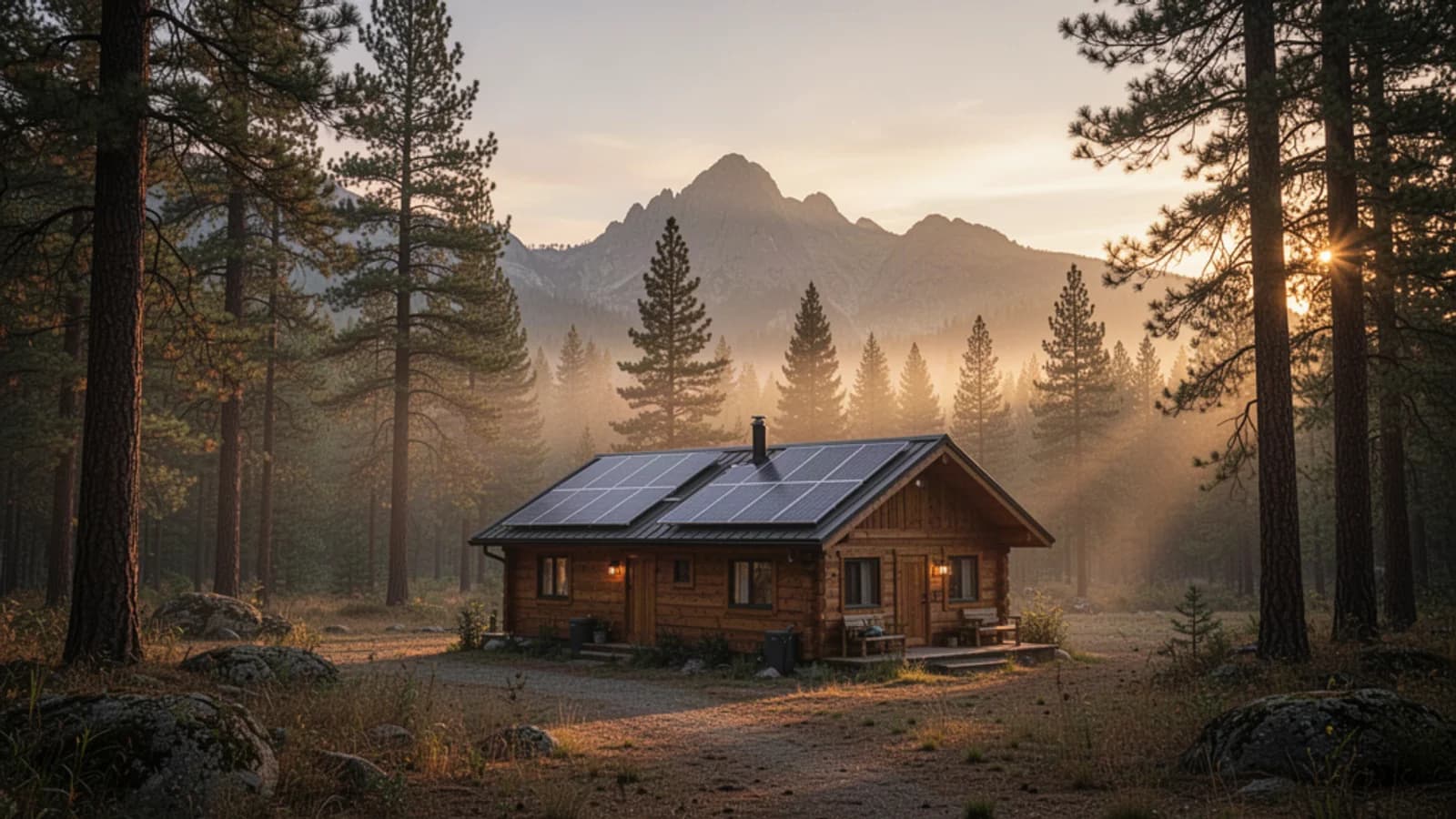
- Solar exposure — south-facing aspect with minimal tree shading for solar panels
- Buildable soil — passes a percolation test for septic installation
- Legal access — deeded road access (not just an informal trail)
- Permissive zoning — county allows off-grid structures, composting toilets, and/or alternative building methods
Step 1: Verify Water Access
Water is the single most critical factor for off-grid land. Your options:
- Well drilling: Most common option. Cost: $5,000-$15,000+ depending on depth. The USGS maintains groundwater depth maps — check before buying. In some areas, wells must go 200+ feet deep ($30-$50/foot)
- Surface water: Springs, creeks, or ponds. Verify water rights — in Western states, surface water rights are legally separate from land ownership (Prior Appropriation doctrine)
- Rainwater collection: Legal in most states but regulated in some (notably Colorado restricts collection, though laws have loosened). A 1,000 sq ft roof captures ~600 gallons per inch of rain
Step 2: Assess Solar and Energy Potential
Solar is the standard off-grid power source. Use the NREL PVWatts Calculator to estimate production for any location.
- Basic off-grid solar system: $10,000-$20,000 for 3-5kW with battery storage (enough for a small home)
- Full off-grid system: $20,000-$40,000 for 8-12kW with extended battery bank
- Federal solar tax credit: 30% of installation cost through 2032 (IRS Section 25D)
Ideal solar land has southern exposure with less than 10% shading between 9am-3pm. Forested parcels may need clearing ($500-$2,000/acre for selective clearing).
Step 3: Check Zoning and Building Codes
This is where many off-grid buyers get caught. Some counties require:
- Minimum square footage for dwellings (often 600-1,000 sq ft — problematic for tiny homes)
- Connection to municipal water/sewer if available within a certain distance
- Permitted septic system (some counties don't allow composting toilets as a primary system)
- Building permits for any permanent structure
The most off-grid-friendly counties tend to be in states like Missouri, Arkansas, Tennessee, Arizona, New Mexico, and Nevada, where rural zoning is minimal or non-existent for unincorporated land.
Step 4: Evaluate Septic and Waste Systems
- Conventional septic: $5,000-$20,000 installed. Requires passing perc test ($250-$1,000)
- Composting toilet: $1,500-$5,000. Allowed as primary system in some counties, prohibited in others
- Greywater system: $500-$3,000. Many states allow separate greywater recycling for irrigation
According to the EPA, approximately 20% of US homes use on-site septic systems. A failing perc test means you'll need an engineered septic system (2-3x the cost) or must rely on composting alternatives.
Step 5: Budget for Total Off-Grid Setup
| Item | Low Estimate | High Estimate |
|---|---|---|
| Land (5-10 acres, rural) | $5,000 | $30,000 |
| Well drilling | $5,000 | $15,000 |
| Solar + battery system | $10,000 | $30,000 |
| Septic system | $5,000 | $20,000 |
| Driveway/road | $2,000 | $10,000 |
| Land clearing | $1,000 | $5,000 |
| Total (before structure) | $28,000 | $110,000 |
Red Flags to Watch For
- No legal road access — landlocked parcels are cheap for a reason
- Wetlands designation — Army Corps wetland areas restrict all development
- HOA or deed restrictions — some rural subdivisions prohibit off-grid structures, outbuildings, or livestock
- Flood zone — FEMA flood zones require expensive insurance and restrict building
- No cell service — check coverage maps. Starlink ($120/month) solves internet but not voice
Bottom Line
Off-grid land is more accessible than ever, but success depends on thorough due diligence. Verify water, solar potential, zoning, and soil before buying. Budget $20,000-$50,000 beyond the land purchase for basic infrastructure. The most off-grid-friendly states offer minimal zoning in rural counties, making it possible to build and live on your terms.
Browse off-grid-suitable land on Acre Dreams and check our county-level data to find affordable rural areas.
Sources: USGS Groundwater Resources, NREL PVWatts, EPA Septic Systems, IRS Section 25D Solar Tax Credit, US Census Bureau, Acre Dreams listing data August 2026.