Quick Answer: Tiny home legality depends on your county's zoning and building codes. The biggest hurdles are minimum dwelling size requirements (many counties require 400-1,000+ sq ft) and foundation requirements (some counties don't allow homes on wheels as permanent dwellings). The most tiny-home-friendly areas are rural counties in Missouri, Arkansas, Tennessee, Arizona, and Texas, where many unincorporated areas have no minimum dwelling size or allow alternative structures. Always verify with the county planning office before purchasing land.
Can you legally put a tiny home on vacant land? The answer varies wildly by jurisdiction — from counties with zero restrictions to cities that classify anything under 600 square feet as an illegal dwelling. Zoning and building codes, not the land itself, determine whether your tiny home plan is feasible.
The Two Types of Tiny Homes (and Why It Matters)
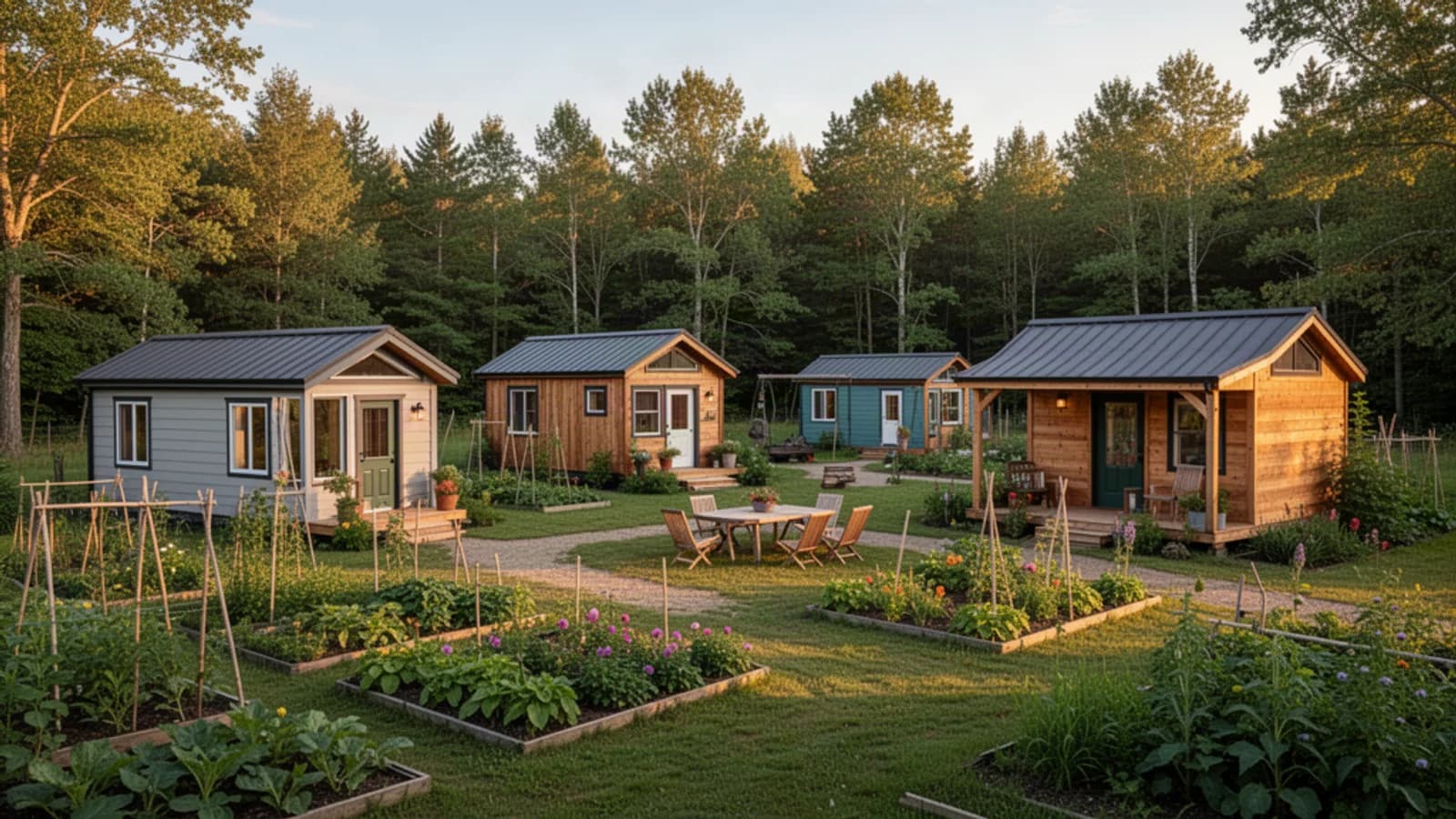
- Tiny home on a foundation (THOF): Classified as a permanent dwelling. Subject to residential building codes. Generally easier to get approved because it meets traditional construction standards, just smaller
- Tiny home on wheels (THOW): Classified as an RV or mobile dwelling in most jurisdictions. Many counties prohibit permanent habitation in RVs/travel trailers, which is how they classify THOWs
This distinction is critical when shopping for land. A county that allows tiny homes on foundations may still prohibit tiny homes on wheels as primary residences.
The Minimum Size Problem
The biggest barrier to tiny homes is minimum dwelling size requirements. The International Residential Code (IRC), adopted by most counties, sets a minimum habitable room size of 70 sq ft with at least one room of 120 sq ft. However, many counties add their own minimums:
- No minimum (best for tiny homes): Many rural counties in MO, AR, TN, and some AZ/NM counties
- 200-400 sq ft minimum: Some progressive counties that have adopted tiny home appendices to the IRC
- 600-1,000 sq ft minimum: Common in suburban and semi-rural counties. Effectively bans most tiny homes
- 1,000+ sq ft minimum: Some HOA-governed areas and strict residential zones
Most Tiny-Home-Friendly States
- Missouri — many rural counties have no building codes for unincorporated land. No minimum dwelling size in these areas
- Arkansas — similar to Missouri with very permissive rural counties
- Tennessee — some counties have no minimum size requirements. No state income tax is a bonus
- Arizona — many rural counties allow alternative structures. Some have adopted tiny home-specific provisions
- Texas — varies widely by county. Many rural counties have no building codes outside city limits. Some cities (Spur, TX) have declared themselves "tiny home friendly"
How to Find Tiny-Home-Friendly Land
- Search for unincorporated land outside city limits — city/town jurisdictions almost always have stricter codes
- Call the county planning/zoning office — ask: "What is the minimum dwelling size for a permanent residence on unincorporated land? Do you allow tiny homes on foundations? On wheels?"
- Check for HOA restrictions — even in permissive counties, subdivision HOAs may impose their own minimum size requirements
- Look for agricultural zoning — AG-zoned land is often more permissive for alternative structures
- Consider RV-zoned land — for tiny homes on wheels, some areas with RV park zoning allow permanent or semi-permanent tiny home placement
Infrastructure Requirements
- Water: Well ($5,000-$15,000) or rainwater collection ($3,000-$8,000) where legal
- Septic: Conventional ($5,000-$12,000) or composting toilet ($1,500-$5,000) where allowed
- Power: Grid connection ($5,000-$30,000) or off-grid solar ($10,000-$25,000)
Total infrastructure for a tiny home lot: $15,000-$50,000 depending on site conditions and county requirements.
Cost Comparison: Tiny Home on Land vs. Traditional Home
| Item | Tiny Home + Land | Traditional Home |
|---|---|---|
| Land (5 acres, rural) | $10,000-$25,000 | Included in home price |
| Dwelling | $30,000-$80,000 | $200,000-$400,000 |
| Infrastructure | $15,000-$50,000 | Included |
| Total | $55,000-$155,000 | $200,000-$400,000 |
| Monthly costs | $200-$600 (taxes, insurance, utilities) | $1,500-$3,000 (mortgage, taxes, insurance) |
Bottom Line
Tiny homes on land can be a path to homeownership at a fraction of traditional costs, but zoning is the gatekeeper. Always verify county regulations before buying land for a tiny home. Focus on rural, unincorporated areas in permissive states for the best chance of approval.
Browse affordable rural land on Acre Dreams and check our county data pages for pricing.
Sources: International Code Council (IRC), state and county building codes, Tiny Home Industry Association, Acre Dreams listing data August 2026.