Quick Answer: A percolation (perc) test measures how quickly water drains through soil to determine whether a conventional septic system can be installed. The test costs $250-$1,000 and takes 1-3 hours of measurement after the holes are pre-soaked (often overnight). A failing perc test means you'll need an engineered septic system ($15,000-$25,000 vs. $5,000-$12,000 for conventional) or the parcel may be unbuildable for residential use. If you plan to build, a purchase contingency tied to a passing perc test is a common safeguard; a real estate attorney or title company can help word it.
A buyer closes on a beautiful 5-acre parcel, applies for a septic permit, and discovers the soil fails the percolation test. No septic means no building permit in most counties. The $800 perc test they skipped before buying would have saved them from a $25,000 mistake.
How a Perc Test Works
A licensed soil evaluator (or county health department inspector) performs the test:
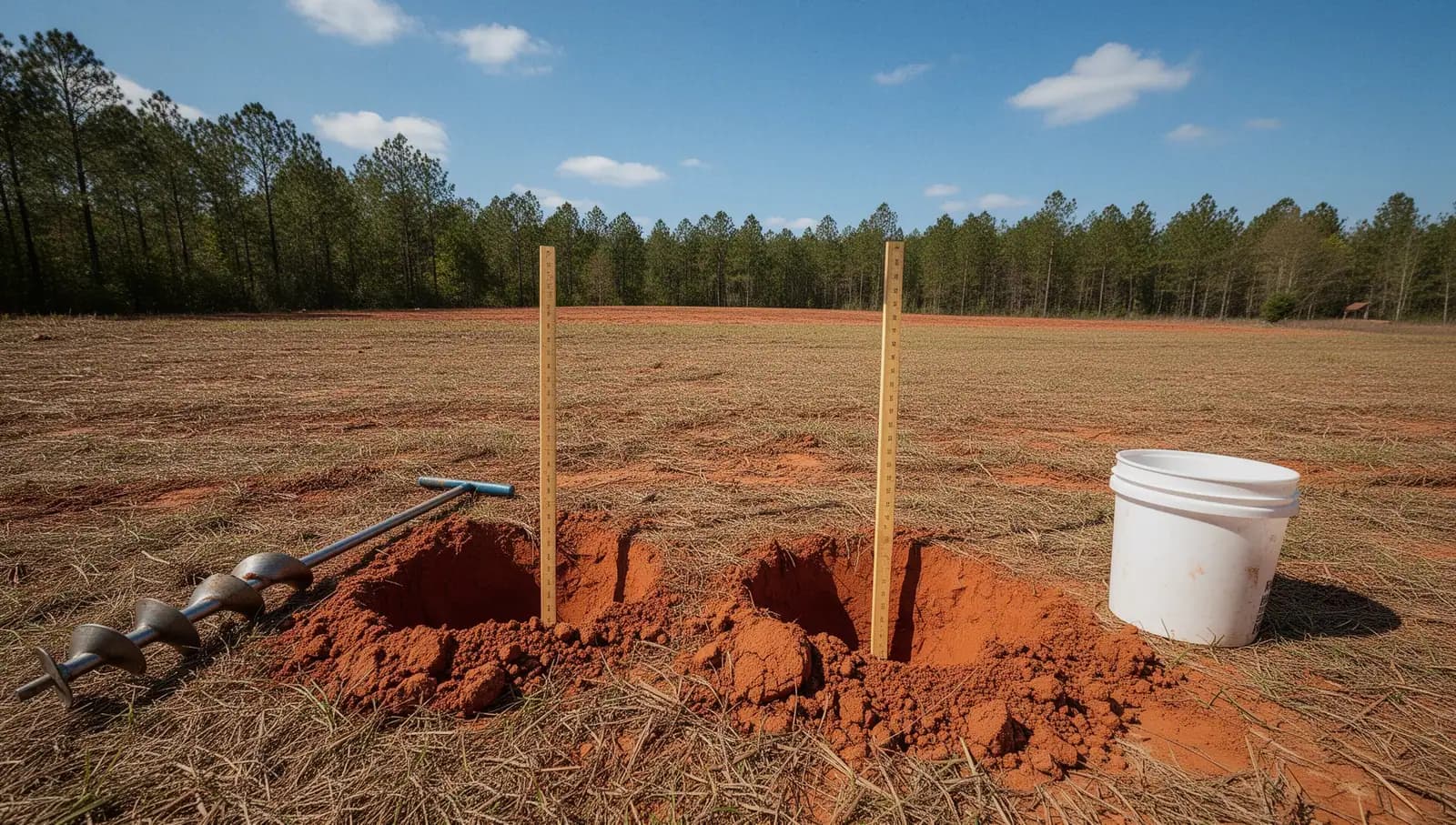
- Dig test holes — typically 2-3 holes at 18-36 inches deep in the proposed drain field area
- Pre-soak the soil — fill holes with water and let them drain overnight (saturates the soil to simulate worst-case conditions)
- Measure drainage rate — refill holes and measure how many minutes it takes for water to drop 1 inch
- Record results — drainage rates are expressed as minutes per inch (MPI)
What the Results Mean
| Drainage Rate | Result | Implication |
|---|---|---|
| 1-60 MPI | Pass | Conventional gravity septic system allowed |
| 60-120 MPI | Marginal | May require pressure distribution or modified system |
| >120 MPI or <1 MPI | Fail | Soil drains too slowly (clay) or too fast (sand/gravel). Engineered system required or building prohibited |
The specific passing range varies by county — some counties set the limit at 45 MPI, others at 60 or 120. Check your county health department for local standards.
What a Failing Perc Test Means for You
A failing perc test doesn't automatically make land worthless, but it significantly changes the economics:
- Engineered septic system: $15,000-$25,000 vs. $5,000-$12,000 for conventional (2-3x the cost)
- Mound system: Builds the drain field above ground. Works in high water table or clay soil areas
- Advanced treatment unit: Mechanical systems that treat effluent before soil absorption
- Composting toilet + greywater: Legal alternative in some counties ($1,500-$5,000 total). Check county regulations
- In rare cases: County may prohibit any occupied dwelling on the parcel
When to Get a Perc Test
- Before closing: A perc test contingency in the purchase agreement is common; depending on how it's written, it can let the buyer cancel if the test fails
- Seasonal timing matters: Some counties require testing during specific seasons (typically spring when water tables are highest). A test done in dry summer conditions may pass when the same soil would fail in spring
- Who orders it: Either buyer or seller can arrange the test. The county health department maintains a list of approved testers
Perc Test Costs by Region
- County health department test: $250-$500 (limited availability in some areas)
- Licensed private soil evaluator: $400-$1,000
- Full soil study (for engineered systems): $1,000-$3,000
According to the EPA, approximately 20% of US homes use septic systems. In rural areas where most vacant land is located, that percentage is much higher — making the perc test one of the most critical due diligence steps for any land purchase.
What If the Seller Already Has a Perc Test?
- Check the date: Most counties consider perc tests valid for 2-5 years. Older tests may need to be redone
- Check the location: The test must be done in the area where you plan to install the drain field
- Verify with the county: Some counties keep records of all perc tests performed on file
A listing that includes a passing perc test is more valuable — it eliminates a major risk factor for the buyer. If you're selling, consider getting a perc test before listing to increase your parcel's appeal and justify a higher price ($2,000-$5,000 value added).
Bottom Line
Never buy land with building intentions without a perc test or perc test contingency. The $250-$1,000 test cost is trivial compared to the up-to-$20,000 difference between a conventional and engineered septic system — or the risk of buying unbuildable land. Ask the seller if a test has been done, check county records, and if neither exists, order one before closing.
Browse land listings with detailed property information on Acre Dreams.
Sources: EPA Septic Systems Program, county health department regulations, Acre Dreams listing data August 2026.