Banks don't love lending on vacant land. Traditional mortgages are designed for houses, and most lenders view raw land as higher risk — requiring larger down payments, higher interest rates, and shorter terms. That's where owner financing changes the game.
How Owner Financing Works
In an owner-financed land deal, the seller acts as the bank. Here's the basic structure:
- Buyer and seller agree on a purchase price, down payment, interest rate, and payment term
- The buyer pays the down payment at closing
- The buyer makes monthly payments to the seller for the agreed term (typically 3–10 years)
- The seller retains a security interest in the property until the balance is paid in full
- Once the final payment is made, the seller transfers clear title to the buyer
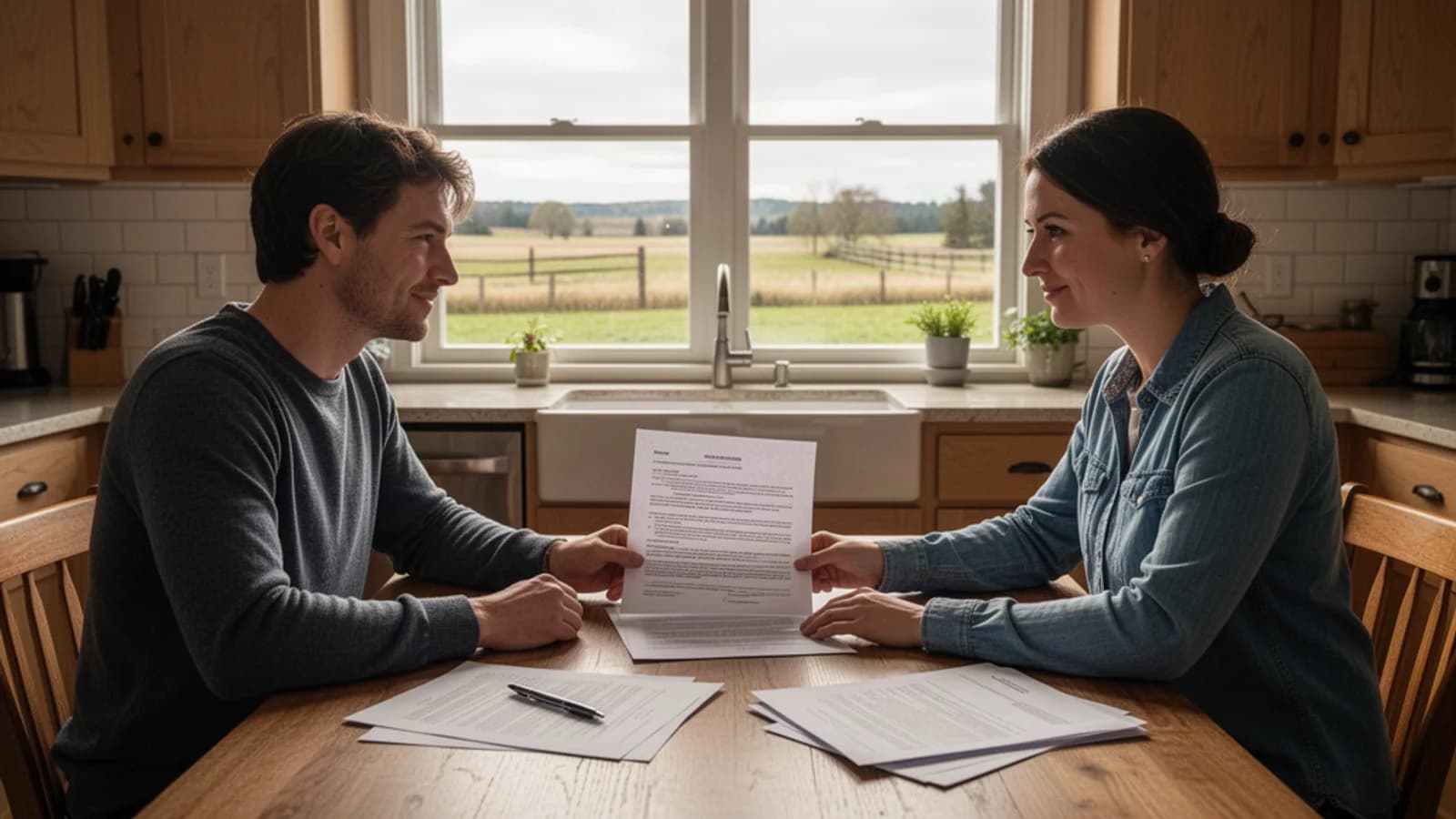
The legal structure varies by state — some use a deed of trust with a promissory note, while others use a land contract (contract for deed). A real estate attorney should draft the documents to ensure both parties are protected.
Benefits for Buyers
Owner financing opens the door to land ownership for buyers who might not qualify for bank financing:
- No bank qualification: No credit score requirements, no income verification, no debt-to-income ratios. The seller sets the terms.
- Lower barrier to entry: Down payments are often lower than what banks require for land loans (which can be 20–50% down).
- Faster closing: Without bank underwriting, closings can happen in days instead of weeks.
- Flexible terms: Payment schedules, interest rates, and term lengths are all negotiable between buyer and seller.
- Build equity immediately: Every payment builds equity in a real asset, unlike renting.
Benefits for Sellers
Sellers who offer financing often sell faster and earn more:
- Larger buyer pool: Many land buyers cannot or prefer not to pay cash. Owner financing dramatically increases the number of qualified buyers.
- Passive income: Monthly payments create a predictable income stream, often for years.
- Higher sale price: Sellers offering financing can often command a premium over cash-only deals. Buyers pay for the convenience.
- Interest income: The interest earned on the financed amount is additional profit beyond the land's sale price.
- Security: The seller retains a security interest in the property. If the buyer defaults, the seller reclaims the land and keeps all payments received.
Typical Owner Financing Terms
While every deal is negotiable, here are common ranges for owner-financed vacant land:
- Down payment: 10–30% of purchase price
- Interest rate: 7–12% annually
- Term: 3–10 years (shorter for smaller parcels, longer for higher-value properties)
- Monthly payment: Calculated based on the financed amount, interest rate, and term using standard amortization
- Late fees: Typically $25–$50 or 5% of the monthly payment after a 10–15 day grace period
On Acre Dreams, sellers list their financing terms directly on each listing — down payment, monthly payment, and term — so buyers can evaluate affordability before reaching out.
How to Structure a Good Deal
For Buyers
- Put down as much as you comfortably can — larger down payments often secure lower interest rates
- Negotiate for no prepayment penalty so you can pay off early if your financial situation improves
- Ensure the contract specifies that you receive a deed upon final payment
- Request that payments be processed through a third-party loan servicing company for transparency
- Always get a title search before signing — you want to know the property is free of liens
For Sellers
- Require enough down payment to cover your cost basis — this protects you if the buyer defaults early
- Use a real estate attorney to draft the promissory note and deed of trust or land contract
- Consider using a third-party loan servicing company to handle payment collection and record-keeping
- Include a default clause with clear cure periods and remedies
- Record the transaction with the county to protect your security interest
Owner Financing vs. Bank Loans vs. Cash
- Cash: Fastest closing, lowest total cost, but requires significant capital upfront.
- Bank loan: Lowest interest rates (typically 5–8%), but requires credit qualification, 20–50% down, and weeks of underwriting. Few banks offer raw land loans.
- Owner financing: Most accessible, fastest to close after cash, flexible terms, but higher interest rates than bank loans. Ideal when bank financing isn't available or practical.
Find Owner-Financed Land
Many sellers on Acre Dreams offer owner financing with clearly posted terms. Filter listings to find affordable monthly payments that fit your budget, and reach out directly to sellers to discuss terms.