Everything you need to know about purchasing vacant land in Alabama — geography, tax benefits, land types, financing, and due diligence.
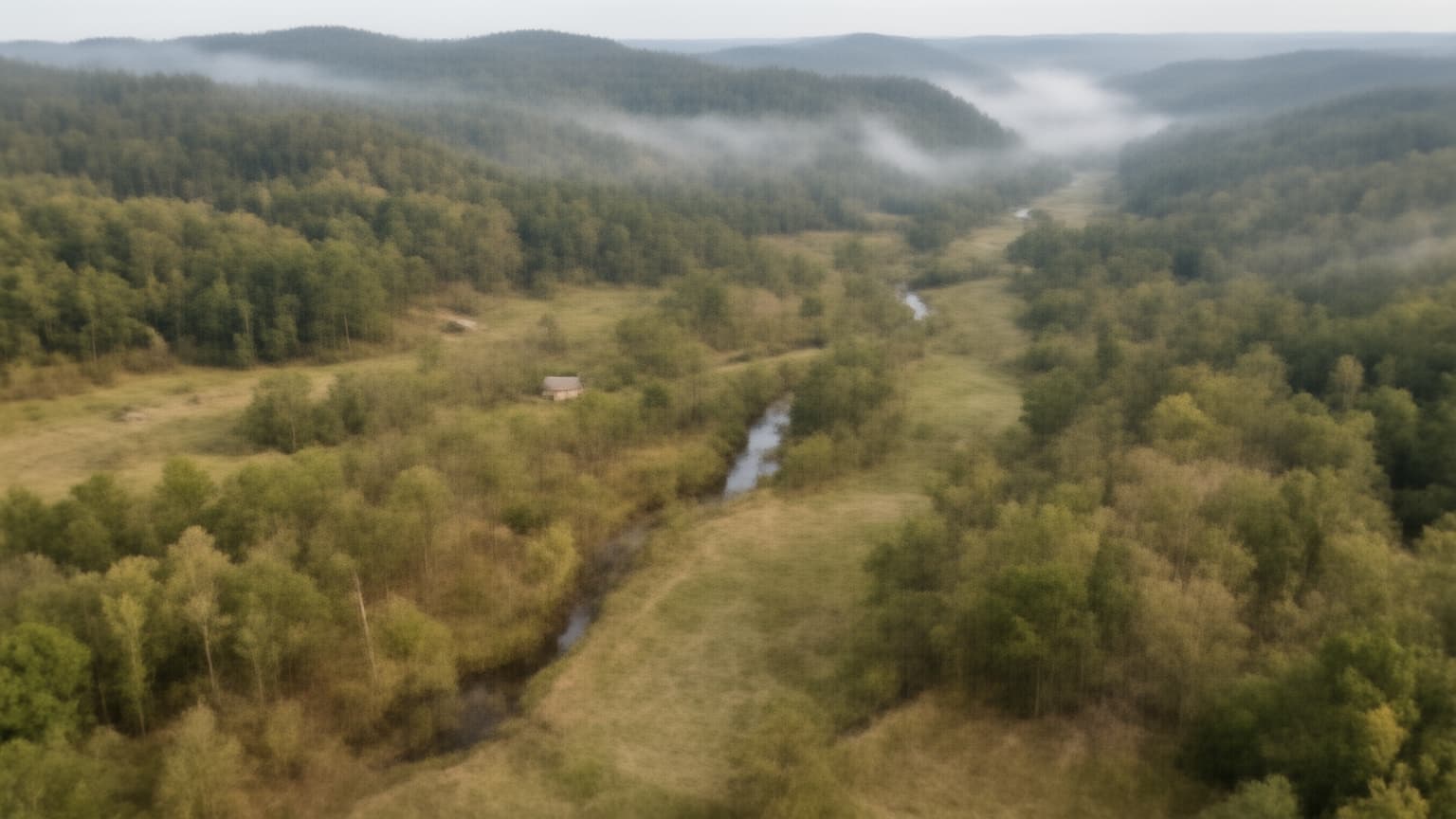
Alabama ranks among the most affordable states for vacant land in the American South, with per-acre prices consistently below regional averages across much of the state. The landscape transitions from the foothills of the Appalachian Mountains in the northeast through the fertile Black Belt prairie to the Gulf Coastal Plain and Mobile Bay in the south. Alabama's 23 million acres of forestland (71% of total land area) make it one of the most heavily forested states in the nation, supporting a thriving timber industry with active markets for pine pulpwood, sawtimber, and hardwood. The state's property tax rates are among the lowest in the country -- Alabama's constitutional cap on property tax keeps rates well below most neighboring states, and timber land classified as Current Use receives even more favorable assessment. With 56-65 inches of annual rainfall, a growing season of 200-300 frost-free days depending on latitude, and no state estate tax, Alabama attracts buyers seeking affordable hunting land, timber investment, homestead acreage, and recreational tracts. The Tennessee Valley Authority (TVA) system provides reliable utilities in the northern tier, while the state's extensive river network (Mobile, Alabama, Tombigbee, Tennessee, Black Warrior) offers waterfront opportunities throughout.
Timberland
loblolly pine plantation and mixed hardwood-pine
Agricultural bottomland (row crops
soybeans
cotton)
Pastureland and cattle ranches
especially north Alabama
Hunting and recreational land (deer
turkey
waterfowl)
Black Belt prairie parcels (rich dark soil
agriculture)
Waterfront tracts (river
lake
and creek frontage)
Residential rural acreage
homestead sites
Mountain and foothill parcels
northeast Alabama scenic land
There is currently 1 parcel available across 1 county, totaling 19 acres.
$3,153
Avg $/Acre
1
County
100%
Offer Financing
19
Total Acres
| County | Listings | Avg $/Acre | Avg Price |
|---|---|---|---|
| Barbour | 1 | $3,153 | $59,900 |
Owner financing is one of the most buyer-friendly aspects of the vacant land market. The seller acts as the lender — you make a down payment and monthly payments directly to them, with no bank approval required. Currently, 100% of Alabama listings on Acre Dreams offer owner financing.
Owner financing makes land ownership accessible even if you don't qualify for a traditional mortgage. Look for the “Owner Financing Available” badge when browsing listings.
Before purchasing any land in Alabama, complete these essential steps to protect your investment:
Check Alabama county assessor records to confirm the seller is the legal owner. Get a title search to uncover liens, easements, or encumbrances. For purchases over $5,000, title insurance is recommended.
Verify the property has legal road access — either public road frontage or a recorded easement. Use satellite imagery to confirm physical access matches legal descriptions. In rural Alabama, some parcels may be landlocked.
Contact the county planning department to confirm permitted uses. Can you build? Are manufactured homes allowed? What are setback requirements? Zoning rules vary by county in Alabama.
Check FEMA flood maps for the parcel. Zone X means minimal risk. Zones A and AE carry higher flood risk and may require insurance for structures.
Check the county tax collector for current annual taxes and any delinquent amounts. Vacant land taxes are typically low, making land one of the cheapest assets to hold long-term.
Alabama offers some of the lowest land prices and property taxes in the Southeast. The state has no estate tax, constitutionally capped property tax rates, and extensive forestland supporting active timber markets. The growing season is long, and owner financing is commonly available on rural parcels. As with any land purchase, due diligence — including verifying zoning, access, flood zones, and tax status — is essential before buying.
Alabama is widely recognized for having among the lowest property tax rates in the nation, with a constitutionally capped assessment system. Rural and timber land classified under Current Use is assessed at a fraction of market value, which can result in very low annual tax bills on vacant acreage. The exact amount depends on your county's millage rate, the property's classification, and current assessment rules. Tax rates and classification requirements can change over time. Contact your county tax assessor's office to get current rates and understand how a specific parcel would be assessed.
It depends on your goals. Northeast Alabama (DeKalb, Cherokee, Marshall counties) offers mountain terrain and lakes. The Black Belt region (Dallas, Marengo, Wilcox counties) tends to have lower per-acre prices and strong hunting opportunities. Central Alabama (Coosa, Talladega, Clay counties) balances affordability with timber and recreation. Southwest Alabama (Washington, Clarke, Choctaw counties) is known for large timber tracts. The Gulf region (Baldwin, Mobile counties) offers coastal proximity at higher price points. Each region has distinct terrain, soil types, and community character.
Alabama generally permits hunting on private land during established seasons with a valid state hunting license, and the state is consistently ranked among the top destinations for whitetail deer and turkey hunting. However, whether you can hunt on a specific parcel depends on several factors: county or municipal ordinances (some restrict firearm discharge near residences), deed restrictions or covenants, property size and proximity to neighboring structures, and any conservation easement restrictions. Hunting regulations — including season dates, bag limits, and legal methods — are set annually by the Alabama Department of Conservation and Natural Resources and can change. Contact Alabama DCNR and your county government to confirm current rules for any property you are considering.
Utility availability varies by region. Northern Alabama is generally well-served by TVA power and rural water systems. In central and southern Alabama, well water is commonly available, though drilling depths vary by location. Septic systems are standard for rural parcels — a perc test is recommended before purchasing to confirm soil suitability. Many rural counties have co-op electric service available, but connection costs and distance to lines can vary significantly. Cell coverage can be limited in heavily forested areas. Always verify utility availability and estimated connection costs for a specific parcel before purchasing.
Browse available properties across 1 counties in Alabama. Many offer owner financing with no credit check.
Browse Alabama Land